

Courtesy of Balenciaga
There has long been a point of intersection between art and commerce. In recent decades, however, this relationship has evolved into a wider marketing framework, one that leverages cultural shifts and ideological positioning in the service of corporate branding. Central to this approach is the strategic alignment with cultural capital and values. It is this logic that underpins collaborations between brands and artists as well as the process often described as “artification,” whereby brands draw on the authority of art to signal sophistication and enhance perceived value and uniqueness.
In principle, the artist contributes symbolic capital while the brand provides scale, infrastructure and visibility. When these contributions are balanced, the result can expand both artistic discourse and market reach. In practice, however, this balance is difficult to sustain, and the risk of misalignment is never far off.
Successful collaborations begin with shared authorship (not only in name, but in process): early alignment between artist and brand establishes expectations around vision, execution and boundaries. Without it, even well-resourced projects can collapse under the weight of miscommunication. Equally critical is the preservation of artistic control: when artists are reduced to aesthetic consultants rather than conceptual leads, the work risks becoming rather meaningless, decorative at best. The outcome of an effective collaboration should feel organic to the artist’s practice while also remaining credible to both art-world and consumer audiences.
Failed partnerships, on the other hand, tend to expose the fault lines between creative autonomy and corporate interest, revealing the fragility of such alliances. The case studies that follow illustrate how these breakdowns occur and the dynamics behind them, from misaligned expectations to insufficient communication, cultural mismatch, tone-deaf messaging and, increasingly, reputational risk.

Provided by Judy Chicago and Donald Woodman

© Chicago Woodman LLC, Judy Chicago-Artists Rights Society(ARS), New York
Photography courtesy of Chicago Woodman LLC, Donald Woodman/ARS, New York

Provided by Judy Chicago and Donald Woodman
Judy Chicago × Google (2026): Process under strain
In early fall 2025, Google commissioned the American artist Judy Chicago to create a public artwork for the renovation of the Thompson Center in downtown Chicago. The work would consist in adapting one of her landmark “Through the Flower” images into a large terrazzo floor, paired with a 17-story glass elevator installation. The concept was approved.
At least on paper, the conditions for a successful collaboration seemed to be in place: a major public commission with significant funding and visibility, bringing together two powerful actors: on one side, a tech giant, on the other, a pioneering figure of feminist art with a career spanning more than six decades and work held in major museum collections worldwide.
Yet what began as a high-profile partnership ultimately ended with Chicago’s decision to withdraw from the project and publicly recount her experience in a pointed Artnet essay titled “Want a masterclass in how not to work with artists? Ask Google” where she detailed what she described as mismanagement and a disregard for her artistic vision. At issue was not simply creative disagreement, but a deeper and structural failure of alignment on how the work would be realized. Reports suggested a lack of clear communication channels and insufficient respect for the artist’s autonomy, resulting in a project environment that Chicago deemed untenable. A spokesperson for Google, Ryan Lamont, told ARTnews that the company had been unable to reach agreement with the artist on specifications and timeline, adding that no formal contract had been finalized. Beyond questions of planning and governance, Chicago also raised concerns about institutional bias. She described resistance to the project’s cost, including remarks from a city council member who questioned whether her work justified the proposed price, even though it was the same that the Whitney Museum had paid.
The breakdown is particularly striking when contrasted with the artist’s 2020 collaboration with Dior. That project, a participatory quilt titled What If Women Ruled the World, toured internationally and was widely praised for integrating Chicago’s feminist ethos within the brand’s platform. The artist herself described it as “the greatest creative opportunity I had ever had.” In hindsight, she reflected: “I realize that one of the reasons for the success of the Dior projects was that, from the start, we worked directly with the company’s principals, including upper management where all the decisions are made. This required an intense collaboration, which is what we assumed the Google project would involve.”
In this light, the difference between the two projects appears to lie not in scale or ambition, but in structure and, specifically, in whether the artist’s voice is meaningfully centered within the process. The Google commission eventually came to exemplify a shift from institutional patronage to perceived corporate overreach, underscoring the importance of process in collaborative work, regardless of budget or visibility.
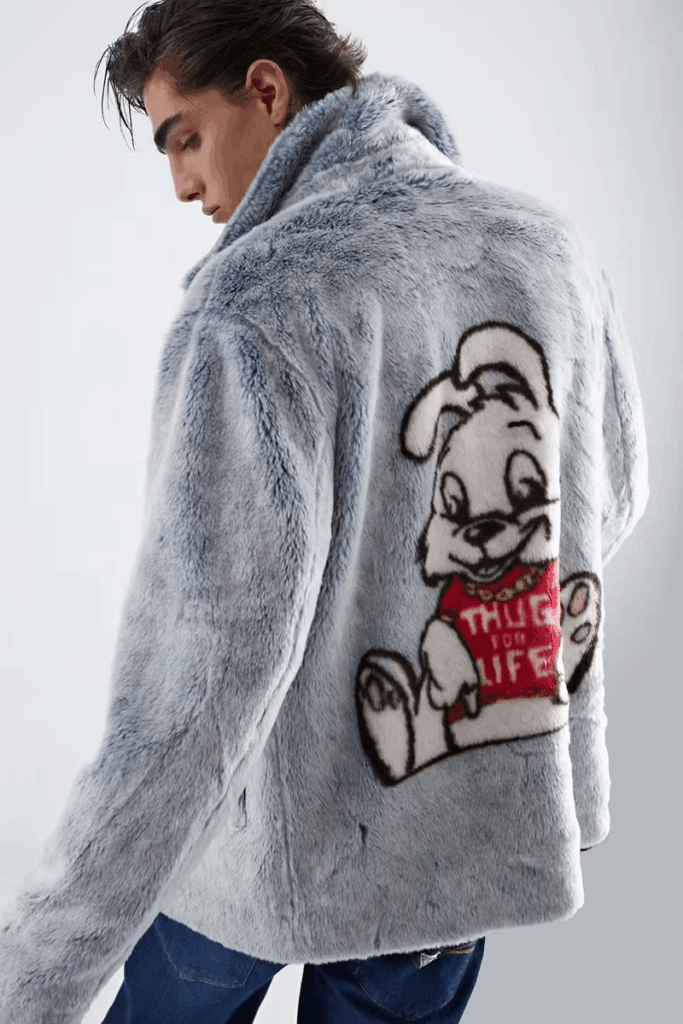
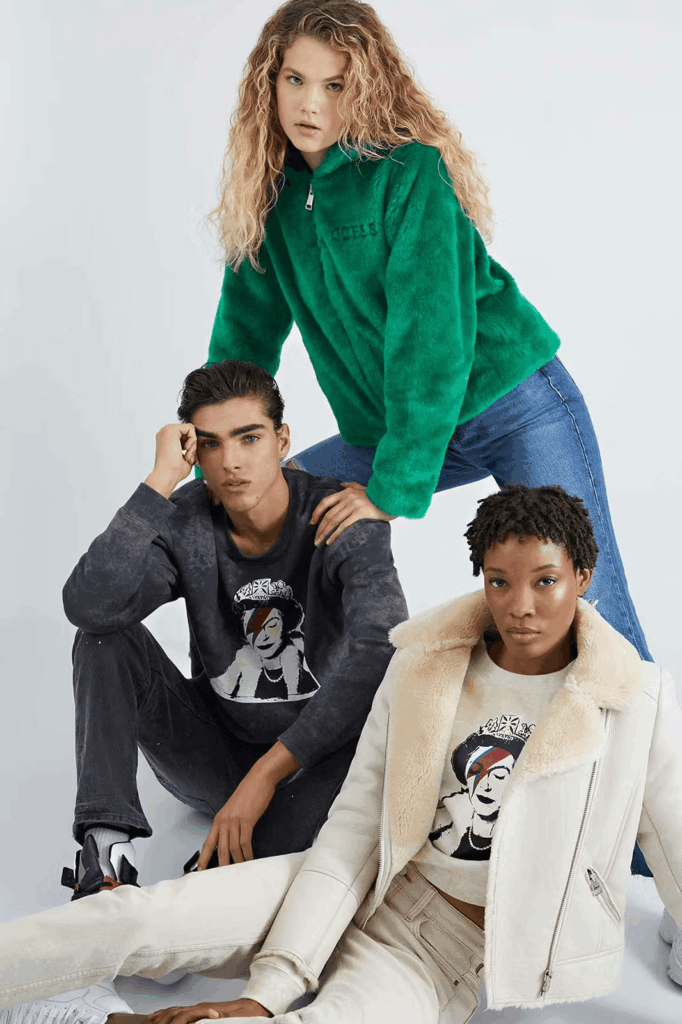
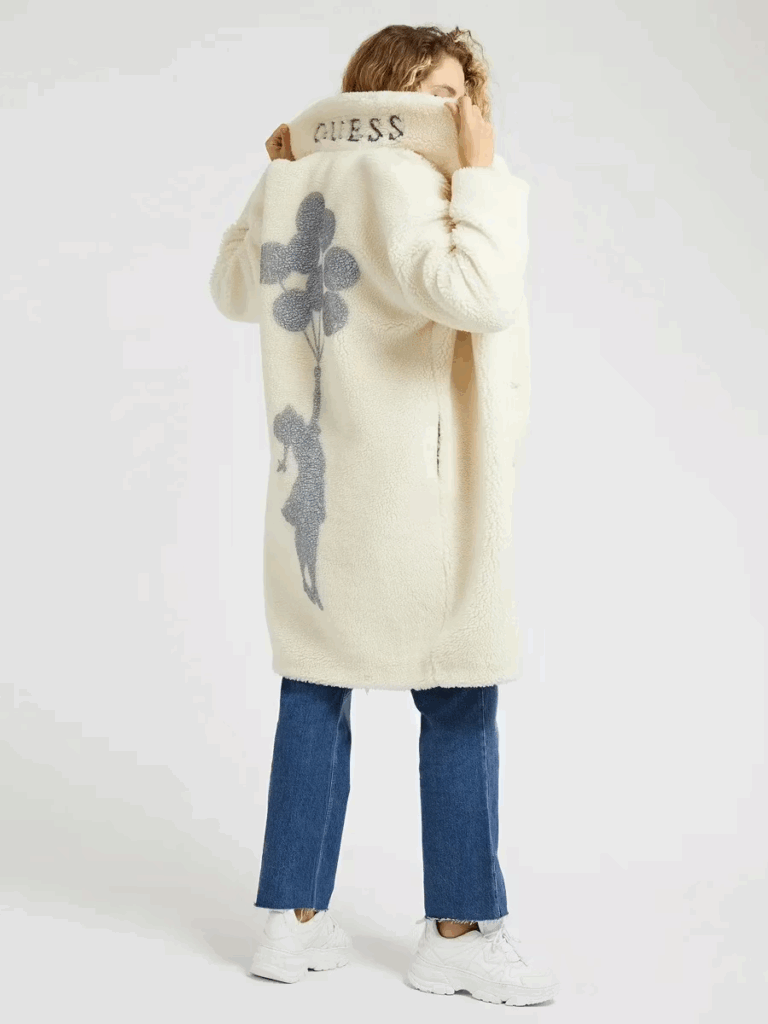
Banksy × GUESS / Brandalised (2022): The limits of appropriation
If the Chicago–Google case illustrates internal misalignment, the dispute involving Banksy and GUESS reveals the consequences of bypassing the artist altogether. In 2022, the American clothing company released a line of apparel featuring imagery associated with the street artist and political activist Banksy, produced in partnership with Brandalised, a company claiming the right to license street art motifs.
The response was swift and unambiguous. The then-anonymous artist publicly condemned the collection and encouraged his Instagram followers to shoplift from the store as a form of protest: “They’ve helped themselves to my artwork without asking, how can it be wrong for you to do the same to their clothes?”. The statement drew widespread media attention and prompted heightened security measures and temporary store closures at a London location.
At the center of the controversy is a question that has long surrounded street art: who, if anyone, owns it? And under what conditions can it be commercialized? While Brandalised asserted legal authorization, the absence of the artist’s consent undermined the collaboration’s cultural legitimacy. What’s more, Banksy’s work, which is often grounded in anti-establishment critique, was here repurposed as a commercial asset – an inversion many viewed as fundamentally contradictory.
So the failure was also conceptual. By extracting visual motifs without engaging the underlying ethos of the work, the “collaboration” reduced politically charged imagery to surface-level design. The backlash suggests a growing sensitivity among audiences to such dissonance, particularly when the artist’s identity is closely tied to critique of the very systems being leveraged for profit.

Image courtesy of Street Beat

Image courtesy of Street Beat

Image courtesy of Street Beat

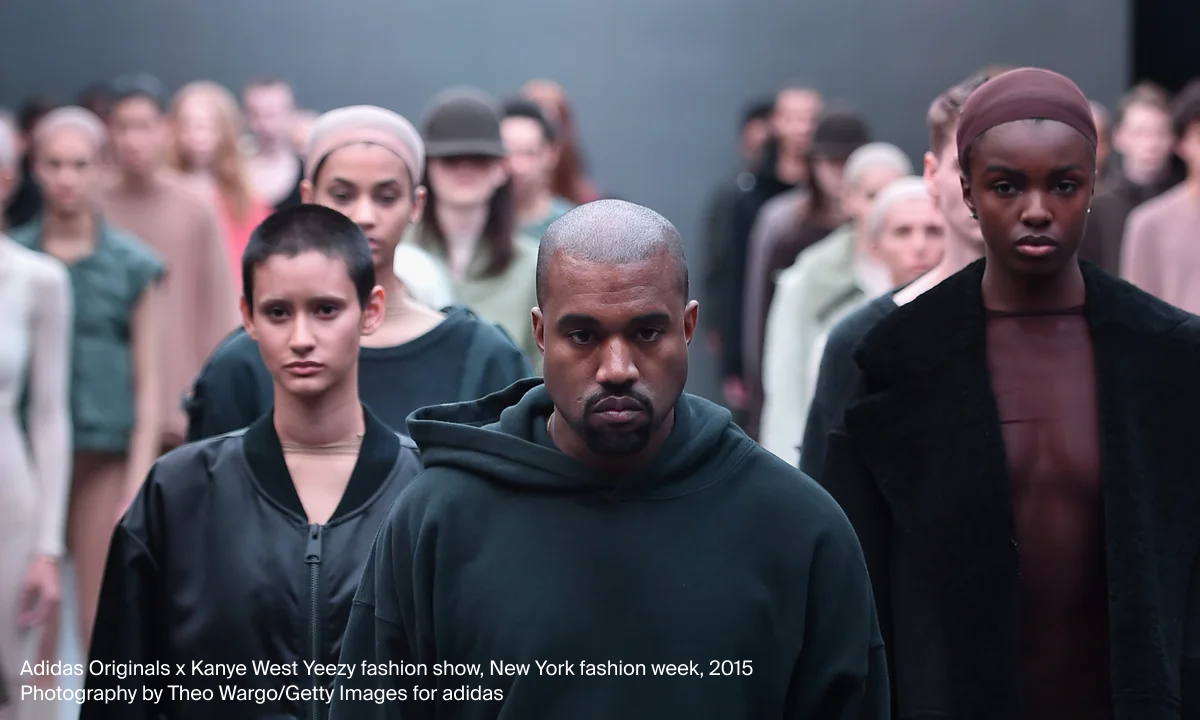
Kanye West × Adidas (2022): Diverging values
Launched in 2015, Adidas Yeezy was a collaboration between the German sportswear company and the American rapper and fashion entrepreneur Kanye West, known as Ye, producing limited-edition sneakers and apparel that quickly reshaped the economics of scarcity in fashion. Within one year, Adidas described it as the “most significant partnership created between a non-athlete and a sports brand.” By 2020, Forbes would call Yeezy’s ascent “one of the great retail stories of the century.”
Its collapse in 2022 proved nearly as consequential as its rise, marking one of the most financially significant breakdowns in the history of artist–brand collaborations.
The break came after a series of antisemitic remarks by West, including a statement that he could “say anti-Semitic things and Adidas can’t drop me.” Within days, Adidas announced it would terminate the partnership immediately, stating that it did not “tolerate antisemitism and any other sort of hate speech.” The company added that Ye’s comments were “unacceptable, hateful and dangerous,” and in violation of its stated values of “diversity and inclusion, mutual respect and fairness.” Retailers such as Gap and Foot Locker, quickly followed, pulling Yeezy products from their shelves.
The relationship between the two partners was already strained after years of reported internal concern regarding the artist’s behavior. “Behind the scenes, things with Ye were bad already for a long time,” one former manager told the Financial Times, citing erratic decision-making, missed timelines and repeated conflicts. Previously the rapper had, for his part, accused Adidas of appropriating his designs in a now-deleted Instagram post. Still, the decision to end the partnership carried immediate financial consequences. Adidas projected losses of hundreds of millions of euros, tied in part to unsold Yeezy inventory. This not being a marginal collaboration but a central revenue driver, its sudden removal exposed the extent to which the brand had become structurally dependent on a single creative partner.
Unlike disputes over creative control or intellectual property, the rupture here was driven by reputational risk. This case highlights two key elements: first, that collaborations that hinge on individual personalities must account for volatility, but also, more critically, the centrality of value alignment in long-term partnerships. As brands are expected to uphold the ethical standards they profess, the personal conduct of collaborators becomes inseparable from the brand itself and, in moments of crisis, it’s impossible to contain.
Santiago Sierra × Balenciaga (S/S 2023): Aestheticizing crisis
The Spring/Summer 2023 presentation by Balenciaga, developed in collaboration with Santiago Sierra, offers a different kind of failure, one rooted in interpretation and reception. The Spanish artist, whose work has long engaged with themes of labor, inequality, and systemic violence, imported 275 cubic meters of mud from a French peat bog, transforming the runway into a mud-filled expanse. According to Demna, Balenciaga’s creative director, the set was intended to be about “digging for the truth and being down in the earth,” though many critics saw something else entirely: displacement, poverty, environmental collapse. And while the show did draw praise in outlets like the New York Times, others recoiled at what they described as a dystopian “war-zone chic aesthetic.”
Sierra’s work has often been the center of controversy, but transposed into a luxury fashion show, the imagery took on an even different resonance. What might function as critique in the setting of contemporary art appeared, in another, as spectacle. “The machinery of neoliberal globalism is working perfectly,” the dealer Stefan Simchowitz observed. “Consume everything in its path and use it to sell sell sell.”
Critics argued that the show aestheticized suffering, converting symbols of crisis into high-fashion theater. The result was a deep misalignment between intent and effect, and was only heightened by Balenciaga’s recent history of contentious advertising campaigns, which had already sharpened scrutiny of the brand’s messaging.




Toward more meaningful collaborations
These cases, varied in form and outcome, are not meant as prescriptions so much as points of departure. It is worth remembering that, at their heart, collaborations are about added value, amplification. As Mark Breitbard, president and CEO of Gap, has put it, “When we look at collabs, our filter is simple: is it fun? Is it unexpected? Is it a vibe? The right partner brings relevance we can’t create alone.”
But if one is to draw shared lessons for future artist–brand partnerships, what, then, distinguishes the collaborations that resonate from those that unravel?
First, the most enduring partnerships are grounded in shared values among the brand, the collaborator and the audience they seek to engage. Second, collaboration must be structural. Early-stage alignment, clear contractual frameworks and sustained communication are not ancillary concerns. Third, context matters as much as content. The meaning of an artwork shifts when it enters corporate, luxury or commercial environments, which risks producing ethical dissonance. Finally, the artist’s role cannot be peripheral. Authorship must be explicit, visible and respected.
With these as starting points, the collaborations that succeed (and matter) will be those capable of generating resonant meaning.
Words: Benedetta Ricci